You finally have time to rest. A free weekend. A day with nothing scheduled. An evening where nobody needs anything and you could actually do nothing.
And instead of resting you're cleaning things that don't need cleaning. Starting projects that could wait. Scrolling your phone in a way that's more anxious than relaxing. Finding anything to do except the nothing you supposedly wanted.
When you do try to rest, when you make yourself sit down and be still, you last about seven minutes before the restlessness takes over. Before you're up again, filling the space, finding the task, moving away from the stillness you claim you want but apparently can't tolerate.
When rest started feeling dangerous
Rest wasn't always uncomfortable. At some point in your life you could probably just be still without it feeling like a threat. But somewhere along the way rest became associated with things that weren't restful.
Maybe rest meant your guard was down and that's when bad things happened. Maybe stillness meant someone else's needs would rush in to fill your space. Maybe doing nothing meant you weren't valuable and being valuable was how you stayed safe.
Your nervous system learned that rest equals vulnerability. That the moment you stop moving you become a target. That staying busy is how you maintain control and losing control is dangerous.
So even though you're exhausted, even though you desperately need to stop, your system won't let you. Because to your body, rest still means danger.
What fills the space rest should occupy
You've gotten creative about avoiding actual rest while convincing yourself you're resting. You watch TV but you're also on your phone. You take a bath but you're planning tomorrow. You lie down but your mind is already three days ahead making lists.
You've found ways to appear restful while staying activated. To look like you're doing nothing while your nervous system is still doing everything.
Real rest, the kind that actually restores you, requires letting go. Of control. Of productivity. Of the need to always be doing something useful or preparing for what's next. And that letting go feels impossible when your system believes letting go is what allows danger in.
The sabotage that happens right at the edge
This is the pattern you probably recognize. You create space for rest. You clear your schedule. You set up conditions that should allow you to relax. And then right at the moment where you could actually sink into it, something in you disrupts it.
You remember something urgent that needs to be done. You create a problem that requires your immediate attention. You pick a fight or spiral about something or find any reason to abandon the rest before it can actually reach you.
This isn't self-destructive. This is self-protective. Your nervous system is protecting you from the vulnerability rest requires. From the loss of control. From the space that stillness creates where all the things you've been outrunning might finally catch up.
You're not broken for this. You're just operating from a system that learned rest wasn't safe and is still running that program even though circumstances have changed.
Learning to tolerate restoration
Healing doesn't mean forcing yourself to rest. It means slowly teaching your nervous system that rest doesn't equal danger anymore. That you can stop moving and nothing bad happens. That stillness is actually safe now.
This happens gradually. In small increments. You don't go from constant motion to full rest overnight. You practice tiny moments of just being. Of sitting without a task. Of breathing without planning. Of existing without producing.
At first, it will be uncomfortable. Your system will resist. You'll feel that familiar restlessness trying to pull you back into motion. And sometimes you'll follow it because that's still safer than sitting with the discomfort.
But sometimes you stay. Just one minute longer than you want to. Just one breath past the point where you'd normally get up and find something to do. And in that staying your nervous system gets a tiny piece of evidence that maybe rest isn't what it thought rest was.
Over time, those small moments accumulate. Your tolerance for stillness builds. Your system starts to learn that letting go doesn't mean losing control. That rest can actually feel good instead of threatening.
You don't need to sabotage rest to stay safe. You just need to teach your body that safety can exist in stillness too.
The part of you that resists rest isn't self-destructive. It's a survival pattern doing the only job it knows. When you understand which pattern is yours, you stop fighting yourself and start working with yourself instead.
Take the two-minute quiz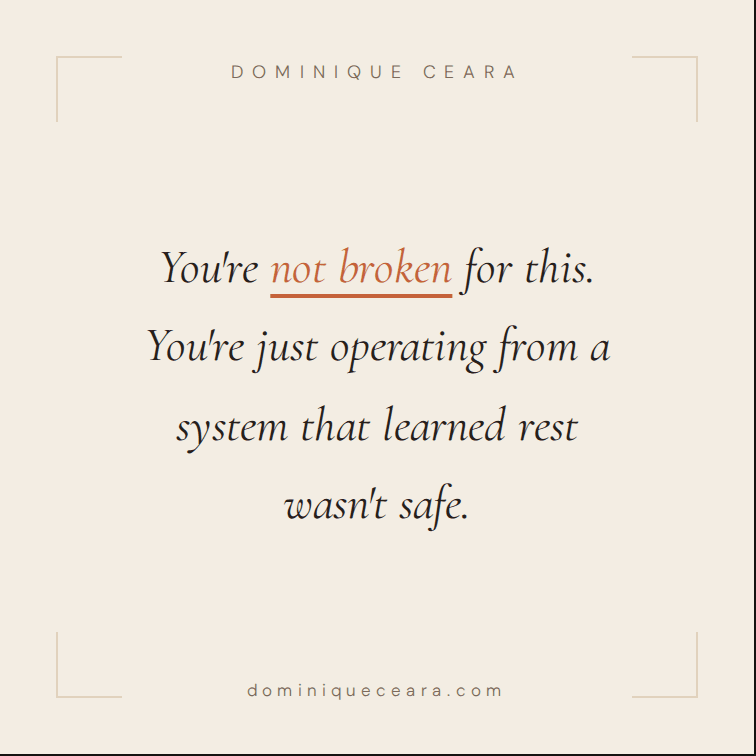
Originally published on Substack
Dominique Ceara
As a certified breathwork instructor, somatic healing practitioner, and life coach, I am dedicated to guiding others on their journey of healing, growth, and transformation. With a unique blend of ancient wisdom and modern techniques, I empower individuals to connect mind, body, and spirit, fostering resilience and clarity in every step of their personal evolution.